

Richard Mille AlUla Desert Polo: Complete Guide
Polo, Reimagined in the Dunes
Polo has been played on grass for the better part of two thousand years. AlUla broke that rule in 2020, staging the sport for the first time on open desert sand. Set against the sandstone canyons surrounding Saudi Arabia's first UNESCO World Heritage Site, Hegra, the AlUla Desert Polo has grown from a one-off experiment into a fixture of the Winter at Tantora festival and one of the standout dates on the Gulf's winter sporting and social calendar.
It remains, to this day, the world's only organised desert polo tournament – a distinction that has made it as much a cultural moment as a sporting one, drawing royalty, professional players and fashion press to a purpose-built arena in the middle of the desert. The 2026 edition, held in January, marked the tournament's fifth running and its biggest yet, with six teams and eighteen players contesting nine matches over two days, in a country whose modern polo scene barely existed before the tournament arrived.
Polo Without a Pitch
Desert polo keeps the essentials of the traditional game – two teams, a ball, mounted players swinging long-handled mallets – but changes almost everything about how it plays out. The tournament is contested on a purpose-built sand arena rather than a grass field, and the surface behaves differently underfoot and underball: sand absorbs pace, changes how a ball rolls and bounces, dampens the long, sweeping strokes possible on grass and asks more of a horse's footing and conditioning than turf ever does. Matches are shorter and more contained than a classic outdoor fixture, run over a handful of chukkas suited to the arena format, with the desert setting itself acting as a natural boundary in place of the boards used in conventional arena polo.
Teams are built to a distinctive three-player formula: one professional player, one international patron and one dignitary, a structure designed as much to blend elite sport with royal and celebrity participation as to produce a conventional handicap contest. Women players have competed since 2024, a change that has widened both the playing rotation and the tournament's profile and reflects a broader shift toward mixed-gender participation across elite polo more generally. Matches are scored conventionally by goal, with the winner of each tie determined at full time rather than by handicap adjustment, keeping the format closer to arena polo than to the outdoor game most spectators know.
Royals, Riders and the AlUla Cast
The tournament's growth has tracked the calibre of player it attracts. Argentina's Adolfo Cambiaso – founder of the La Dolfina Polo Team and widely regarded as the finest player of his generation – was a fixture in the tournament's early years, joined in some editions by his son Adolfo 'Poroto' Cambiaso Jr and daughter Mia Cambiaso, extending a family dynasty onto the sand. Fellow La Dolfina great Pablo MacDonough, a long-standing Richard Mille brand ambassador, has been one of the tournament's most consistent presences across multiple editions, playing at the 2026 event alongside professionals David 'Pelón' Stirling Jr, Ignacio 'Nacho' Figueras, Lia Salvo, Catalina Maria Lavinia and Felix Alejo Ortiz de Taranco Stirling.
Royal and dignitary participation has been just as central to the tournament's identity as the professional line-up: the 2026 field included HRH Prince Salman bin Sultan bin Salman Al Saud among the local players, alongside international patrons including Naveen Jindal, Venkatesh Jindal, Babar Naseem and Jennifer 'Jenny' Luttrell. It is this mix – Argentine polo royalty riding alongside actual royalty – that gives the tournament its particular flavour, distinct from any grass-court equivalent, and explains why it draws as much attention from lifestyle and society press as from polo specialists. Team compositions are reshuffled year to year, so a patron or dignitary who rode for one side one season may appear under a different team banner the next, keeping line-ups fresh even as the same core of professional talent tends to return.
Looking Ahead to 2027
The tournament has run every January since its 2020 debut, staged as part of the wider Winter at Tantora festival at Mohammed Yousuf Naghi AlFursan Equestrian Village in AlUla – and following that pattern, a January 2027 edition is expected, though the Royal Commission for AlUla had not published confirmed dates at the time of writing.
Recent editions have followed a consistent build-up: team and player announcements land roughly a week before the event, with a team presentation evening ahead of two days of round-robin and knockout matches. The 2026 edition set the template organisers appear likely to build on again – six teams, eighteen players and nine matches across the weekend, alongside a Cultural Oasis of local artisans, music and food, and a marquee exhibition match pairing some of the tournament's best-known professional and royal names. Beyond the polo itself, the event has increasingly positioned itself as a lifestyle occasion as much as a sporting fixture, with premium hospitality packages and a Polo Players Circle add-on offering guided pitch-side access before or after matches. Ticketing for recent editions has opened roughly a month out, with single and two-day passes sold through the Experience AlUla platform.
The Reigning Champions of the Sand
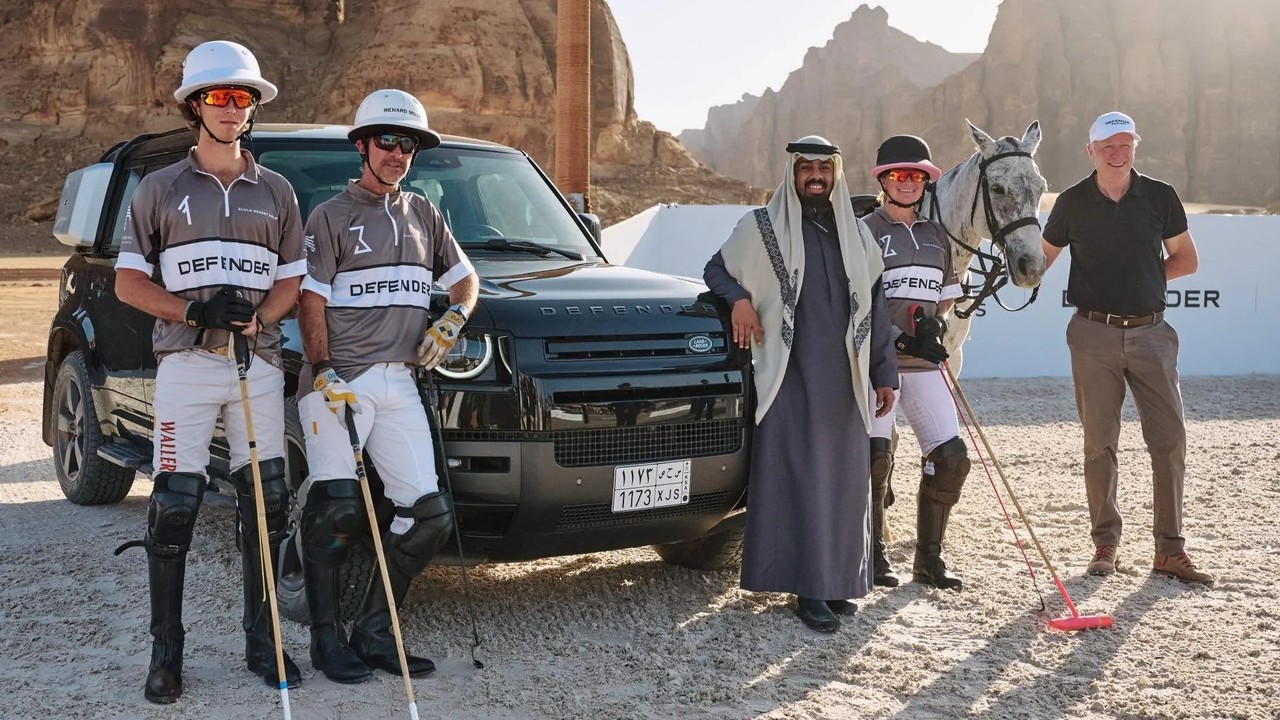
The most recently completed edition, held on 16–17 January 2026 at Mohammed Yousuf Naghi AlFursan Equestrian Village, went to Team Defender – Pablo MacDonough, Jenny Luttrell and HSH Prince Eugen zu Oettingen – who beat Team AlUla 9–8 in a tight final to lift the AlUla Desert Polo Trophy. The result continued the tournament's run of different champions from year to year: the previous edition, held on 17–18 January 2025, had gone to Team Richard Mille, who beat Team Ikmah 8–6 in the final, with Bentley claiming third after edging AlUla 6–5 in the third-place playoff, and Dadan taking fifth with a 7–6 win over Budget.
Nacho Figueras finished the 2025 tournament as its top scorer, Prince Hamzah bin Abbas of Jordan was named Best Player, Claire Mountbatten took the Best Female Player award, and the horse Obsolete was named Best Horse – honours that, alongside the team result itself, reflect how the tournament rewards both elite professional form and its wider cast of royal and celebrity participants. With no team yet having retained the trophy in consecutive years, the identity of Team Defender's 2027 challenger is likely to be one of the more closely watched storylines once the next edition's line-up is confirmed.