

Angus Gold: The Art Of Managing Champions
The Middleman Who Never Gives Orders
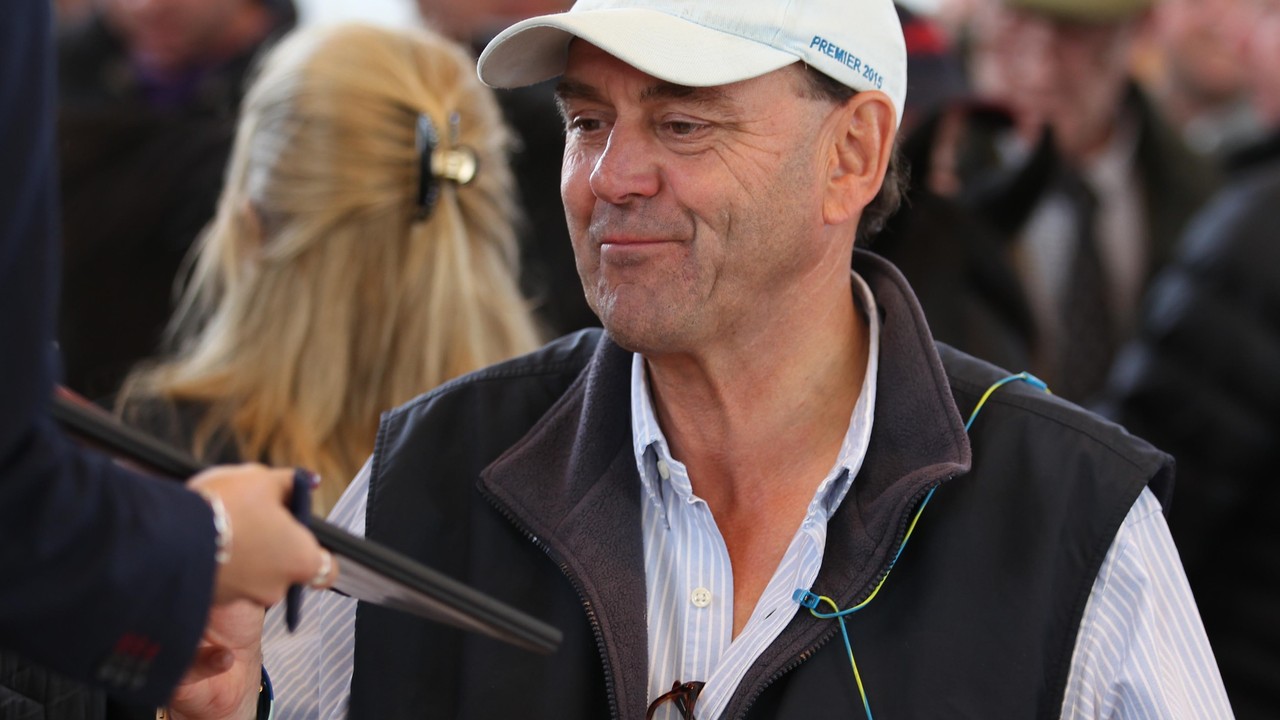
Angus Gold has never trained a racehorse in his life, and he considers that fact central to how he has spent more than three decades managing some of the most decorated bloodstock in the world. As racing manager to HH Sheikh Hamdan bin Mohammed bin Rashid Al Maktoum's Shadwell operation, Gold's job has never been to give orders. "I'm only the middleman between Sheikh Hamdan and his trainers," he says. The trainers Sheikh Hamdan appointed were chosen because he believed them good at their craft, and Gold has built a career on resisting the temptation to second-guess them. "The last thing I needed to be doing was interfering with a trainer's plans," he explains. "There's a big difference between interfering, telling a trainer what to do, and working with the trainer."
Gold was in his mid-twenties when he took the post in the 1980s, having learned to ride at trainer Ian Balding's yard as a teenager with no family background in racing. More than three decades later, he remains one of the most recognisable figures at sales grounds and racecourses worldwide.
That distinction, subtle but load bearing, has defined Gold's approach from his first day in the job. The trainer makes the decisions, he says, and his own role is to work around that, stepping in only when a genuine difference of opinion calls for it, whether a horse should race over a mile and a quarter rather than a mile, or whether easier ground might suit it better. "It's very much a collaborative process," Gold says. "It's vital to work with the people entrusted to look after those horses rather than just tell them what to do." By his own estimate, disagreement is the exception rather than the rule. "I'd say 80% of the time it's very straightforward, and the path a particular horse should take is fairly obvious – distance, ground, the way it travels, that sort of thing," he says.
A Nine-Year-Old Who Refused To Slow Down
Nowhere has that collaborative instinct been tested more visibly than with Al Aasy, the Shadwell-owned, William Haggas-trained 9YO gelding who remains one of the most durable performers in the yard. Bred by Sunderland Holdings and sired by Sea The Stars out of the Shamardal mare Kitcara, Al Aasy has raced for Haggas since making his debut in 2020, a career that has included a neck-margin runner-up effort behind Pyledriver in the 2021 Coronation Cup and eight Group Three victories to date. His recent form has shown no sign of fading with age. On 18 April, he was second in the Gr.3 John Porter Stakes at Newbury under Tom Marquand, beaten half a length by Convergent.
He returned to winning ways on 4 July, taking the Listed Charlie Wood Stakes at Beverley by one and a half lengths under Cieren Fallon as the 4/9 favourite. On 1 August, chasing a hat-trick after victories in the Gr.3 Glorious Stakes at Goodwood in 2024 and 2025, he made a strong challenge up the rail but had to settle for third, with stablemate Opportunity second behind Roger Varian's front-running winner, Enfjaar. It leaves Al Aasy with career earnings past £600,000 (US$809,000) without ever landing a race at the very top level, a record Gold calls "a remarkable tally for this country."
Two years ago, Gold thought the moment had come to send Al Aasy into retirement. "If it had been up to me, I would probably have retired him two years ago, so he could go out at the height of his powers," he admits. Haggas disagreed, countering with a question that, in Gold's retelling, needed no real answer. "Why would we retire him? This horse is just going to stand in a field for the rest of his life. He still loves his racing and he's still very competitive, so why don't we keep going with him?" Gold deferred, as his own philosophy demands he must. "He's been a stalwart for Shadwell when we needed some older horses to keep the flag flying, and he's led the charge on that front," he says of the horse's late-career second wind. The nine-year-old, still winning into a tenth season, has made the case for the trainer's judgement rather better than any argument Gold might have advanced for the opposite.
From Deauville Catalogues To The Tattersalls Ring
Al Aasy's longevity sits alongside the wider success Shadwell has enjoyed with progeny of Sea The Stars, a sire line that has also produced the unbeaten miler Baaeed and the Coronation Cup winner Hukum for the operation. Where those two were homebred, Al Aasy came to Shadwell from outside, a reminder that the yard's pipeline has never depended on breeding alone; the purchasing side of Gold's work has always run in parallel with it.
Homebreds carry their own particular pleasures and their own particular puzzles, as Gold discovered this year while looking over Shadwell's young stock in Ireland. "We've got one very well-bred mare," he says, whose first foal is "now a two-year-old, and a lovely individual." Her second foal, by contrast, has arrived unusually small. "The mare is a good size, the first foal was a good size, and suddenly this yearling comes out very small," Gold says, adding that only time will tell whether the horse "is going to grow enough." Knowing a family's history, he suggested, is what turns such a puzzle into something manageable. "That's where it helps to know the families and the mares. That's the joy of home-breeding, you have that advantage, and you know what the rest of the family looked like." The same logic extends to what a family reveals about ground and maturity. "The traits of the family – you might know they're all much better on fast ground, or alternatively on soft ground, or that they're all very immature but improve with age," he says. "That's a huge help when you're dealing with any of them; knowing the family history a little bit helps put them into context."
The scale of the operation Gold oversees is not incidental to how he describes his role. HH Sheikh Hamdan Al Maktoum, Deputy Ruler of Dubai, built Shadwell into a global operation spanning stud farms in Suffolk, County Kildare and Kentucky, breeding and racing horses across Europe, the United States and the Gulf. Managing bloodstock decisions across an operation of that size is precisely why the middleman model works, since no single person could credibly out-judge every trainer in every discipline.
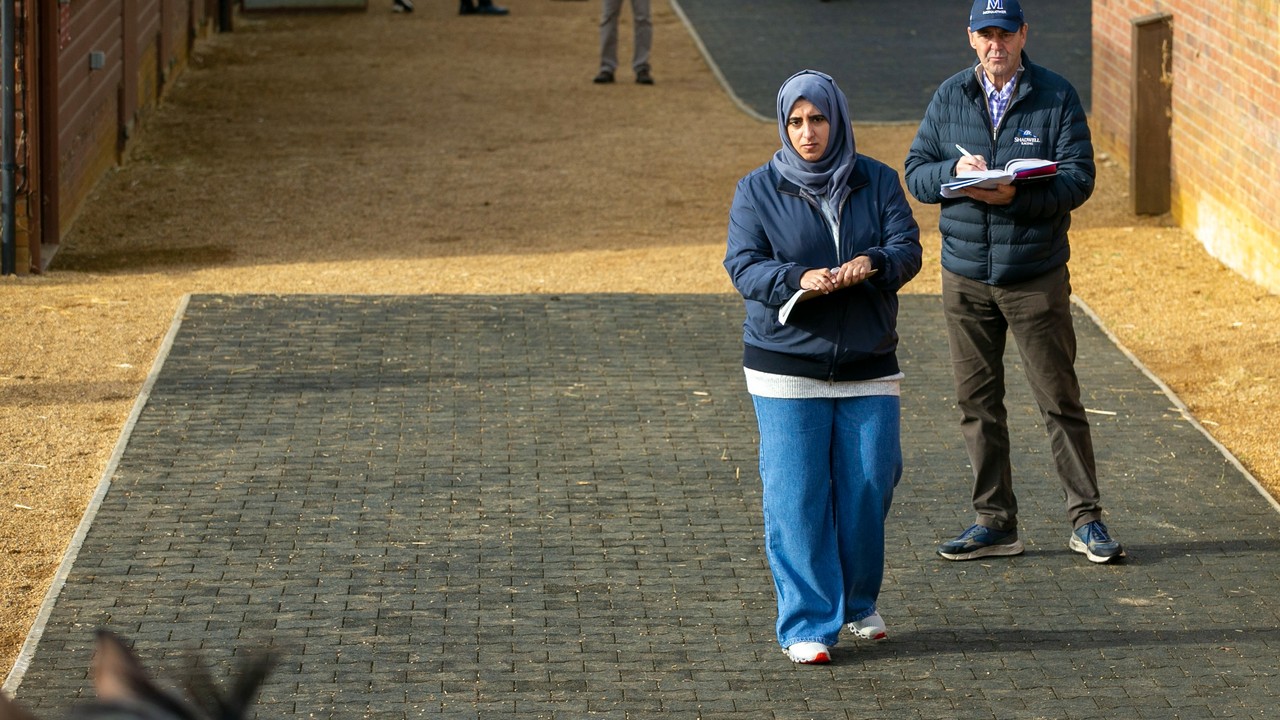
If the racecourse is where Gold's collaborative instincts are tested, the sales ring and the breeding shed are where they are formed years in advance. Buying and breeding, he says, has "always been part of my role." Under Sheikh Hamdan, Shadwell would once buy up to 100 yearlings in a single year; the operation is more selective now, though the groundwork has changed little. At the time of this interview, Gold was working through the catalogue for the Arqana yearling sale in Deauville, due to begin within three weeks, cross-referencing pedigrees before doing what he has always preferred to do in person. "I'm old-fashioned; nothing beats seeing them in the flesh," he says. The Deauville sale itself has grown into one of Europe's most significant yearling markets, with more than 300 lots typically passing through the ring across three days each August.
That preference sends him to stud farms across Europe every September, ahead of the roughly 1,500 horses that pass through Book One and Book Two of the Tattersalls sales at Newmarket over a fortnight. Seeing horses at home lets him watch them in a calmer state than they present at the sale itself, he explains, and gives him time with staff and stud managers that the sales ring does not allow. The same instinct extends to breeding decisions. In Shadwell's earlier years, stud managers in America, Ireland and England worked alongside pedigree researcher Carol Palfreyman, who tracked crosses and nicks in detail before mating suggestions were compiled and sent to Sheikh Hamdan for approval, a process his family remains closely involved in today. "They have ideas, and we try to work with those ideas as long as we think it's the right thing to do," Gold says.
Reading Racecourses From Moonee Valley To Newmarket
Decades spent at racecourses on every continent have given Gold a form of knowledge that cannot be bought at auction, a working map of how tracks themselves shape a horse's chances. "There are so many little pieces that go into making a successful racing career for any horse," he says, and track suitability is one of the largest. He pointed to the Cox Plate, traditionally run over the tight turns of Moonee Valley before this year's move to the more galloping Flemington while the Victorian venue undergoes redevelopment, a shift he suggested could favour European-style gallopers who might otherwise have struggled on Moonee Valley's sharper circuit. It will be the first time in the race's history that it is run away from Moonee Valley altogether, underlining just how unusual a test of track-reading knowledge this year's renewal represents.
Closer to home, Gold recalls a two-year-old that ran a shapeless race at Newmarket, unbalanced by the descent into the Dip, before returning to form once switched to easier, flatter ground. "He made himself look no good the first time out simply because he wasn't suited to the contours of the track," he says. Judgements like these, built from a lifetime of watching horses handle undulation, camber and home straights of every length, are what Gold brings to a conversation with a trainer who may never have set foot on a particular course. "It's very clear with most horses, but a short, sharp runner isn't as suited to a galloping track as a more galloping horse would be," he says, adding the caveat that keeps him grounded – that knowing the racecourses "certainly helps," but guarantees nothing.
That caveat runs through everything Gold does. Bloodstock, breeding and racecourse selection are each treated not as sciences to be mastered but as fields of educated opinion, sharpened by decades of paying close attention. "At the end of the day, it's an inexact science," he says. "It's only opinions, so none of us get it right all the time, but we try to minimise the risks as much as we can and give the horse the best chance of winning." It is a modest way to describe a career spent shaping some of the finest bloodlines in the sport, but modesty, in Gold's telling, is precisely the point. The middleman's job, done well, leaves no fingerprints of its own. It leaves only better decisions, made collaboratively, and horses like Al Aasy, still winning at nine, to show for it.