

Fire In The Blood
When The Gulf Summer Tests Every Limit A Horse Possesses
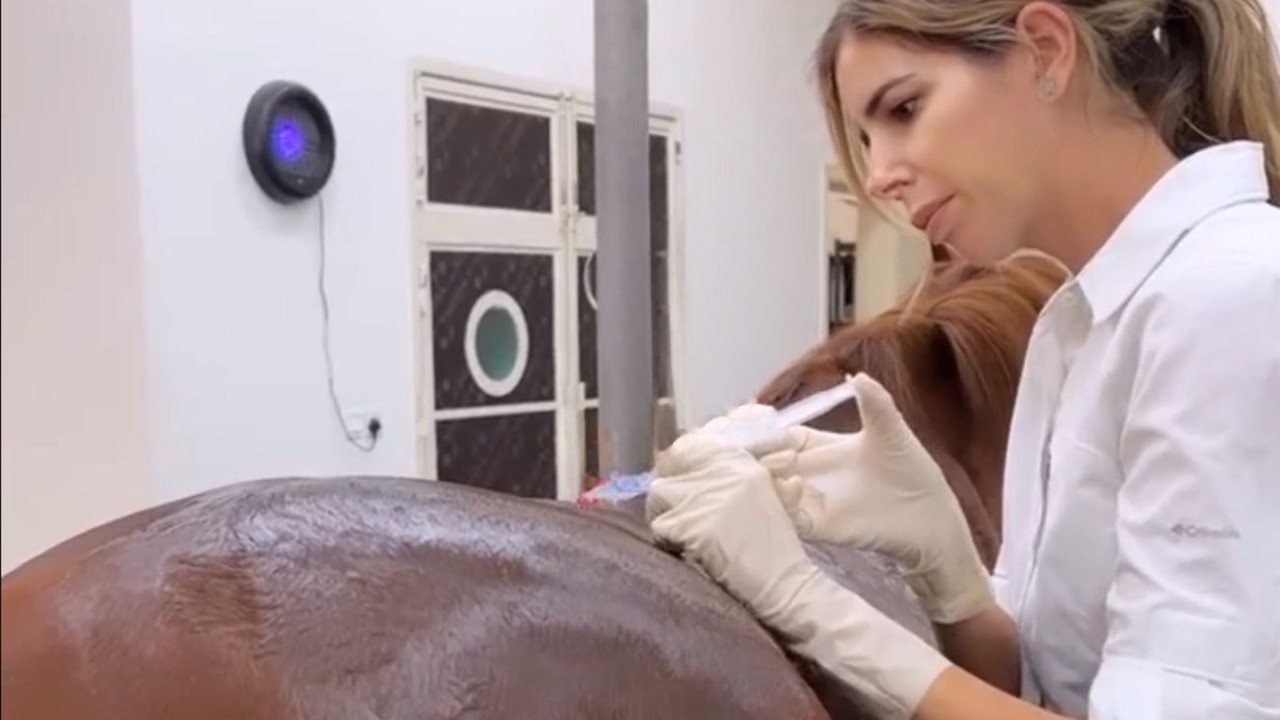
Dr Veronica Sanchez, DVM, Royal Equine Veterinary Clinic
The thermometer reads 45°C. Somewhere in the infield of a Gulf racecourse, a horse is beginning its post-race cool-down, flanks dark with lather, nostrils flared in a relentless search for cooler air. The grooms are already moving, buckets in hand, water cascading over neck and hindquarters with methodical urgency. For the veterinarian standing pitchside, this is not routine aftercare. This is a physiological race of its own – and the margin for error is perilously slim.
The Gulf's summer racing and equestrian season compresses extremes that few sporting environments anywhere in the world can match. Temperatures routinely exceed 40°C across the UAE and Qatar; when humidity is factored in, the thermal load placed on competing horses can push the body's thermoregulatory systems to the edge of what physiology will tolerate. Understanding what happens inside a horse at those limits – and how to manage it – has become one of the defining challenges of equine veterinary practice in the region.
"Heat stress is a complex physiological condition that occurs when a horse's thermoregulatory mechanisms fail to adequately dissipate internally generated and environmental heat," says Dr Veronica Sanchez, DVM, of the Royal Equine Veterinary Clinic. "During exercise, up to 80% of metabolic energy is converted into heat rather than mechanical work, placing significant demand on the horse's cooling systems." In a temperate climate, those systems cope admirably. In a Gulf summer, the same horse – the same physiology – operates in conditions it did not evolve to navigate.
Reading The Body, Reading The Conditions
Healthy adult horses maintain their core body temperature between 37.5 and 38.5°C, within a thermoneutral zone of roughly 5 to 25°C. Thermoregulation relies primarily on evaporative heat loss through sweating, supplemented by respiratory heat exchange and peripheral vasodilation. Under Gulf conditions, each of these mechanisms comes under simultaneous pressure. A horse working in extreme heat can lose between 7.5 and 15 litres of sweat per hour, shedding electrolytes alongside fluid at a rate the body cannot easily replace mid-competition. Research indicates it takes only 17 minutes of moderate exercise in hot, humid conditions for a horse to exceed its normal core temperature range.
The clinical assessment a veterinarian performs before a race or show jumping round in these conditions must account for both the environment and the individual horse. "Heat stress is multifactorial and influenced by environmental, physiological and management-related factors," Dr Sanchez explains. "Environmental conditions such as high ambient temperatures, elevated humidity, solar radiation and poor ventilation significantly reduce the efficiency of heat dissipation." Alongside those external pressures, the clinician evaluates the horse itself: its conditioning, hydration status, coat colour, cardiovascular health and acclimatisation history. A horse arriving from a cooler climate without adequate preparation represents a fundamentally different risk profile from one stabled year-round in the Gulf.
The early warning signs that trainers, owners and veterinarians should monitor in the days before competition are both physiological and behavioural. "Early signs include profuse sweating, tachycardia, tachypnea and mild lethargy," Dr Sanchez notes. "As heat stress progresses, horses may exhibit decreased performance, prolonged recovery times, dehydration and abnormal sweating patterns, including patchy or reduced sweating." A horse displaying patchy sweat in Gulf conditions is a horse whose thermoregulatory capacity is already compromised – a pre-competition finding that demands immediate reassessment.
From Strain To Crisis: A Narrow Window
The distance between early heat strain and a genuine emergency is shorter than many handlers appreciate, and in the Gulf that distance is compressed by humidity as much as by heat. Horses dissipate approximately 65 to 70 per cent of their body heat through sweat and a further 29 per cent through evaporative respiration – but high ambient humidity attacks both mechanisms at once.
Moisture-saturated air reduces the evaporation of sweat from the skin and simultaneously blunts the cooling efficiency of each breath. The horse responds by breathing harder and faster, attempting to shed heat through the respiratory tract, but that compensatory effort yields diminishing returns as humidity climbs.
A useful field measure is the Heat Index – the sum of ambient temperature in Fahrenheit and the relative humidity percentage. When that figure exceeds 150, horses will likely need active cooling assistance after exercise; above 170, competition should be avoided altogether.
At core body temperature of 41.6°C the physiological cascade accelerates. Blood flow is redirected to the skin at the expense of the intestines, causing bacterial leakage into the bloodstream, while reduced cerebral blood flow risks blood-brain barrier breakdown and nerve injury.
"Heat stress progresses to heat stroke when thermoregulatory mechanisms fail completely, resulting in uncontrolled hyperthermia, typically exceeding 41°C," Dr Sanchez explains. "This stage is characterised by central nervous system dysfunction, including ataxia, altered consciousness and collapse, as well as systemic instability. Heat stroke is a medical emergency associated with endotoxemia, coagulopathies and multi-organ failure, and requires immediate and aggressive veterinary intervention."
Diagnosis in the field is primarily clinical, integrating history, environmental conditions and physical examination findings. Key indicators include elevated rectal temperature, increased heart and respiratory rates, signs of dehydration and recent exposure to heat or exercise. "Additional diagnostic tools such as blood analysis may reveal hemoconcentration, electrolyte imbalances, elevated lactate levels and increased muscle enzyme activity," Dr Sanchez says, "which can help assess the severity of the condition and identify secondary complications such as exertional rhabdomyolysis."
The Cooling Protocol: Every Second Counts
The minutes immediately after a race or jumping round are where Gulf equine management is practised under maximum pressure. Every stable operating in summer conditions should have a rehearsed cooling plan in place before the season begins – not assembled in response to a horse in distress.
"Immediate treatment focuses on rapid reduction of core body temperature and stabilisation of physiological parameters," Dr Sanchez explains. "Aggressive cooling should be initiated promptly through repeated application of cold water over large muscle groups, combined with scraping to optimise evaporative cooling."
The mechanics are specific: water is applied, then scraped off immediately, removing heat-laden fluid before it can be rewarmed by the skin surface. The cycle repeats continuously until vital signs normalise. This is not passive hosing; it is active, iterative cooling, and the distinction is clinically significant.
Where the heat event is severe, intravenous fluid therapy is required to correct dehydration and restore electrolyte balance. "Intravenous fluid therapy is often required to correct dehydration and restore electrolyte balance," Dr Sanchez confirms, with "continuous monitoring of vital parameters, including temperature, heart rate, respiratory rate and neurological status" throughout. Horses competing in the Gulf may require 25 to 55 litres of water per day in extreme conditions, and the electrolytes – sodium, potassium, chloride – lost through sweat must be replaced to maintain muscle and nerve function.
For horses competing across back-to-back race days or multiple show jumping classes, the cumulative depletion of fluid and electrolytes creates a compounding deficit. "Adequate hydration and electrolyte supplementation are essential, particularly in performance horses," Dr Sanchez states. A horse presented to the start already in a state of electrolyte depletion is beginning at a physiological disadvantage it cannot reverse at speed.
Anhidrosis: The Condition That Removes The Lifeline
Of all the heat-related conditions affecting horses in the Gulf, anhidrosis carries a particular menace. Where most heat stress risks are amplified by Gulf conditions, anhidrosis is in many respects created by them – and it strikes without regard for breed, fitness level or management quality.
"Anhidrosis is a pathological condition characterised by a partial or complete inability to sweat, significantly impairing thermoregulation," Dr Sanchez explains. "Since sweating is the primary mechanism for heat dissipation in horses, affected individuals are at a markedly increased risk of developing heat stress. The condition is believed to involve dysfunction of the sweat glands, possibly associated with impaired beta-adrenergic receptor responsiveness. Clinically, horses with anhidrosis may present with poor performance, increased respiratory effort as a compensatory cooling mechanism, and recurrent episodes of hyperthermia, particularly in hot and humid climates."
Management for confirmed or suspected anhidrosis centres on environmental mitigation. Air-conditioned stabling on hot days is no longer a luxury in the Gulf equestrian context; for an anhidrotic horse, it is a welfare necessity. Exercise must be confined to the coolest hours of the day, competition entry decisions made conservatively, and the horse monitored closely for any signs of hyperthermia during work. "Long-term management is often required," Dr Sanchez notes – a statement that carries particular weight in a region where horses may have no access to a cooler climate for extended periods.
Acclimatisation And The Horse From Cooler Climates
The Gulf's equestrian and racing circuit draws horses from cooler climates worldwide. Each arrives from a thermal environment that differs radically from the Gulf summer, and each requires a carefully managed transition before competing safely under extreme heat.
"Prevention of heat stress relies on appropriate management, conditioning and environmental control," Dr Sanchez states. "Horses should be exercised during cooler periods of the day, and gradual acclimatisation to hot climates should be implemented over 10 to 14 days." That window is not arbitrary – it is the period the body requires to adjust its thermoregulatory responses to sustained heat exposure. A horse imported and competed before that process is complete is being asked to perform in conditions its physiology is not yet equipped to manage.
The conditioning protocol within that period should build from low intensity during the coolest available hours, with post-exercise recovery times monitored as a guide to thermal tolerance. Shade, ventilation and unrestricted access to fresh water are clinical requirements, not supplementary provisions.
The stakes of mismanaging that window are long-term as well as immediate. "Repeated or severe episodes of heat stress can lead to significant long-term consequences, including chronic performance decline, increased susceptibility to future heat intolerance, muscle damage such as rhabdomyolysis and renal impairment secondary to dehydration," Dr Sanchez warns.
"In some cases, horses may develop persistent anhidrosis, further compromising their ability to regulate body temperature effectively in future exercise or environmental exposure." A horse that suffers a serious heat event early in its Gulf career carries the physiological consequence of that episode into every subsequent season.
The Gulf demands a recalibration of what it means to prepare a horse to compete. The knowledge required to protect horses in extreme heat is available, evidence-based and increasingly refined. What it requires is rigorous implementation – from stable management decisions made weeks before competition to the cooling protocols executed in the critical minutes after the finishing line.
"Effective management of heat load," Dr Sanchez concludes, "is essential to optimise performance, ensure recovery and prevent life-threatening complications." In a region where 45°C is a summer afternoon rather than a statistical outlier, that is not merely good practice. It is the baseline from which everything else must follow.
Dubai World Cup, HH Amirs Sword Cup Festival (Qatar), Saudi Cup, Bahrain International Trophy, Z_OLD_SITE_UNKNOWN_STATUS