

Joint Health And Career Longevity In Showjumpers
Protecting Joints Across A Long Competitive Season
Showjumping sports rarely reveal the full cost of what it demands. Behind every Grand Prix performance there is an accumulating toll, concussive forces transmitted through fetlocks, hocks and coffin joints with each take-off and landing, repeated across seasons that now stretch across two hemispheres, to say nothing of the weight factor (average being 1200 pounds) and different forces involved while stretching, lifting, contracting and landing the whole body.
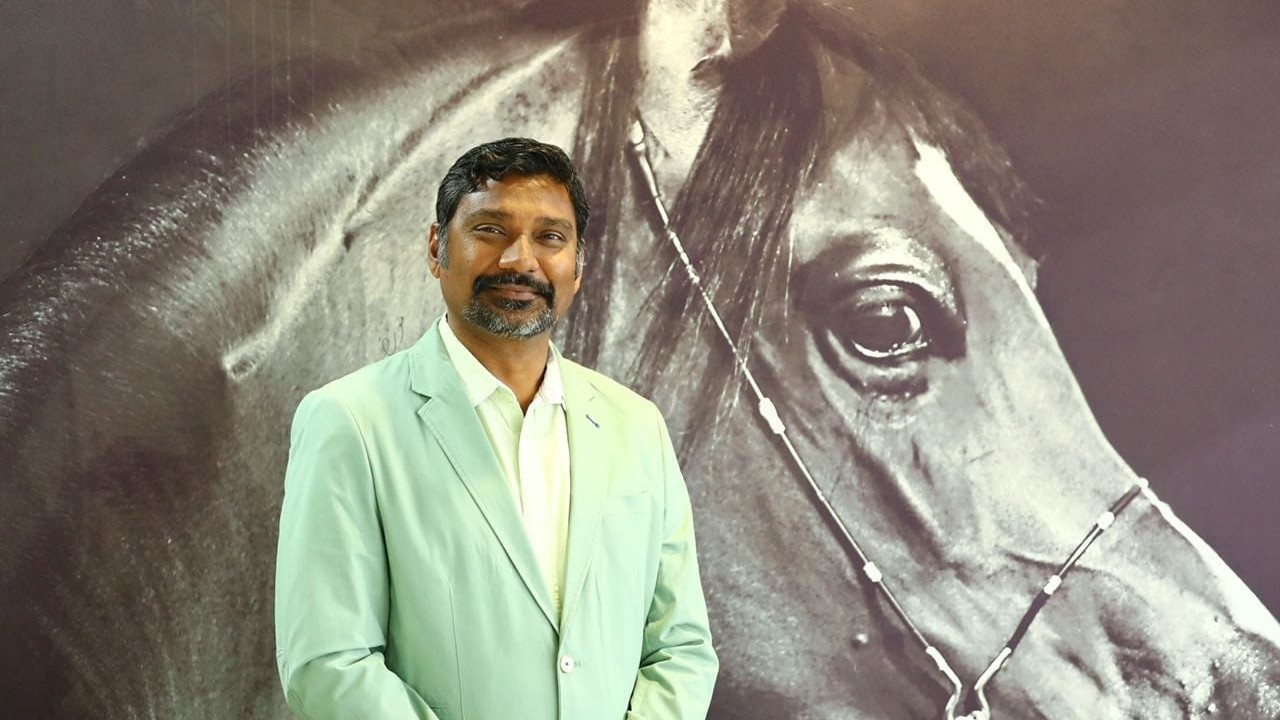
Dr Sujeet B Suryawanshi, Head of the Veterinary Section at Sharjah Equestrian and Racing Club, has spent 25 years working within this discipline, watching it evolve from a contained European pursuit into a sport of truly global reach. "Showjumping is the most white-collared and sought-after faculty of FEI Sports," he says, "and in the last 10 years, especially during and post Covid, the sport has grown by leaps and bounds."
That growth has obviously carried consequences, extending well beyond the scoreboard. The demand, Dr Sujeet notes, is getting difficult to match, particularly when it comes to high-level international competitions such as the Olympics, FEI World Championships and FEI World Cups, Asian Games and Arab League Qualifiers. Gulf nations and those across the region have contributed considerably to the global showjumping landscape in this period, raising the stakes around the very question of horse welfare and career management. In a sport where the horse is both athlete and significant investment, how long that athlete remains sound carries consequences that reach far beyond the arena.
Planning For Joints Begins Long Before Competition
For Dr Sujeet, joint preservation is not a reactive discipline triggered by injury or lameness. It begins before a horse ever sees a competition fence. "Planning is done right from selective breeding, rearing since birth, feed and management, breaking and training, and introducing for competitions," he explains. "Joint preservation starts at the breaking level itself, managed by feeding, nutrition, and farriery and feet care at young horse level."
Cumulative loading for Grand Prix competition begins in earnest from age three, through the identification of horses with the right conformation and bloodlines, early training assessments, the recording of regular performance data and careful introduction to basic-level competition. "Once they go into competitions then regular checks, tailored training sessions and footing conditions play an important role," he says.
What happens in those earliest months of training of a horse's competitive preparation establishes patterns, both physical and managerial, that determine whether a career ultimately spans three seasons or ten. Tracking capacity and stamina during this period, rather than simply pushing for results, separate programmes that produce lasting horses from those that consume them.
The Joints That Bear The Greatest Burden
Showjumping places demands across the entire musculoskeletal system, but certain joints concentrate on the risk. Dr Sujeet is precise about where veterinary attention must be directed. "Utmost concern is for the hind leg, sacroiliac, hip, stifle and hock, and the front leg, shoulder, elbow, carpus and knee — as well as both legs: fetlock, pastern and coffin."
The coffin joint, enclosed within the hoof capsule and resistant to early visual assessment, carries particular danger, the navicular bone being the most notorious of them all. Pathology can advance substantially before any outward sign of lameness emerges, making routine monitoring through advanced imaging all the more essential.
Alongside those structural vulnerabilities, Dr Sujeet identifies a set of behavioural and physical signals that no owner or trainer should dismiss. "Mood swings and behavioural changes, slight indication of discomfort, stiffness or lameness, not collecting well, changes in eating, drinking and rest patterns, and training or workout issues;” these, he insists, are the non-negotiable clinical markers when evaluating a horse with known joint pathology. The horse that stops eating with its usual appetite, or that hesitates at a fence it previously cleared without thought, is already communicating.
Prophylactic Checks And The Gulf Season's Window
One of the defining pressures of showjumping in the Gulf region is the compressed competitive calendar. Dr Sujeet speaks to its implications with authority. "Prophylactic routine checks are mandatory to address any subclinical issues well before the clinical manifestation of actual symptoms, with support of gadgets and diagnostic aids," he says. Intervening before a problem becomes visible is categorically preferable to responding once it has declared itself clinically.
The Gulf context sharpens that imperative considerably. "Especially in Middle East Gulf nations where the sports season is squeezed between the local, GCC and European season, a small window is available for these checkups and treatment if required."
Advances in imaging, MRI, CT and nuclear scintigraphy have expanded the capacity to detect subclinical joint, tendon and ligament changes well before lameness manifests, recalibrating the threshold for intervention from the appearance of symptoms to the appearance of pathology. A joint caught early can be managed with care and precision. The ones identified only after lameness appears have often already sustained lasting damage.
Biological modalities have become central to this proactive philosophy, with PRP and IRAP therapy now used prophylactically in younger athletes, aiming to preserve cartilage integrity before degradation takes hold. "In relation to treatments," Dr Sujeet notes, "with advancement of drug detection techniques and regarding restricted and non-restricted therapies, the whole programme needs to be worked on due to the short time frame, given that FEI has pretty strict rules and regulations."
Corticosteroids, Compliance And The Cost Of Dosing
Intra-articular corticosteroids (separately or in combinations) remain among the most potent tools for managing joint inflammation in competing horses, but their use demands particular care within the FEI regulatory framework. "With the advent of standardised EADCMP, there is high risk of horses testing positive," Dr Sujeet warns, referring to the FEI's Equine Anti-Doping and Controlled Medication Programme. "An extra margin of safety is always suggested over the specified withdrawal period of a drug, which plays a major role in planning the treatment, especially before top-level competitions."
The answer lies not in avoidance but in precision. "Clinical assessment before administration and optimum dosage and selection of the most suitable drugs definitely help in assessing long-term effects on cartilage integrity." Every treatment decision, in a season as compressed as those Gulf horses experience, must be mapped against the competitive calendar from the outset, which leaves no room for either reactive choices or for the recovery windows that more spacious schedules might permit.
The Trainer's Vital Role Across Every Level
Among all the variables that shape a horse's longevity, the trainer's contribution is among the most decisive. Dr Sujeet is direct. "The trainer definitely plays a major role. Behavioural aspects and changes require regular assessment. Horse and rider both need to qualify as individuals and also as combinations."
The structure of a high-performance programme must be tailored carefully to where a horse sits in its development. "At the top level, maintenance," he says, "versus still-developing levels, challenging them on all the aspects."
A trainer managing an established Grand Prix horse is preserving what exists. One working with an emerging competitor is simultaneously building capacity, managing growth and monitoring for signs of excess load. "The trainer has to first pick up the rotation of events required for qualification, then plan accordingly: rest, training, workouts including riding, paddock, spa and physio, in between the extensive training sessions. Feeding, nutrition and balancing supplements play a major role at different training and competition levels." The distinction between these two approaches, he implies, is one that many programmes fail to make clearly enough.
Gene Therapy And Saving The Horse Today
The frontier of joint medicine continues to advance. Gene therapy and cartilage implant research are moving closer to clinical application, and Dr Sujeet sees genuine potential, carefully qualified. "A realistic timeline of these recent treatment modalities to become standard of care depends mostly on their effectiveness in the required situation or condition, the availability of high-quality equipment and treatment, expertise in administration, horse-to-horse individual response, and resultant follow-ups and response in training, fitness and later competition level assessment." The individual horse's response remains, in his view, the variable that no research paper can fully predict.
Regarding conflicting veterinary opinions around a horse with confirmed but manageable joint pathology – a scenario every serious owner eventually faces – he is measured and clear. "Certainly, the opinion of every vet varies with diagnosis and level of condition. The basis must be the earliest possible detection, and experience of the vet matters a lot more." There is no algorithmic answer to these decisions, only experience applied carefully to evidence.
What Dr Sujeet returns to, ultimately, is something simpler and more durable than any particular protocol or technology. "You save your horse for the day," he says. "Through proper care, management, maintenance, training, supplementation and timely assessments, the possibility of bringing him back is high with sheer professionalism." In a sport that extracts so much from its athletes, that measured, patient philosophy, always orientated around the horse's future as much as its present performance, remains the foundation upon which career longevity is truly built.