
Arc Opens Door To Geldings From 2027 Season
EPC Ratifies France Galop Gelding Plan
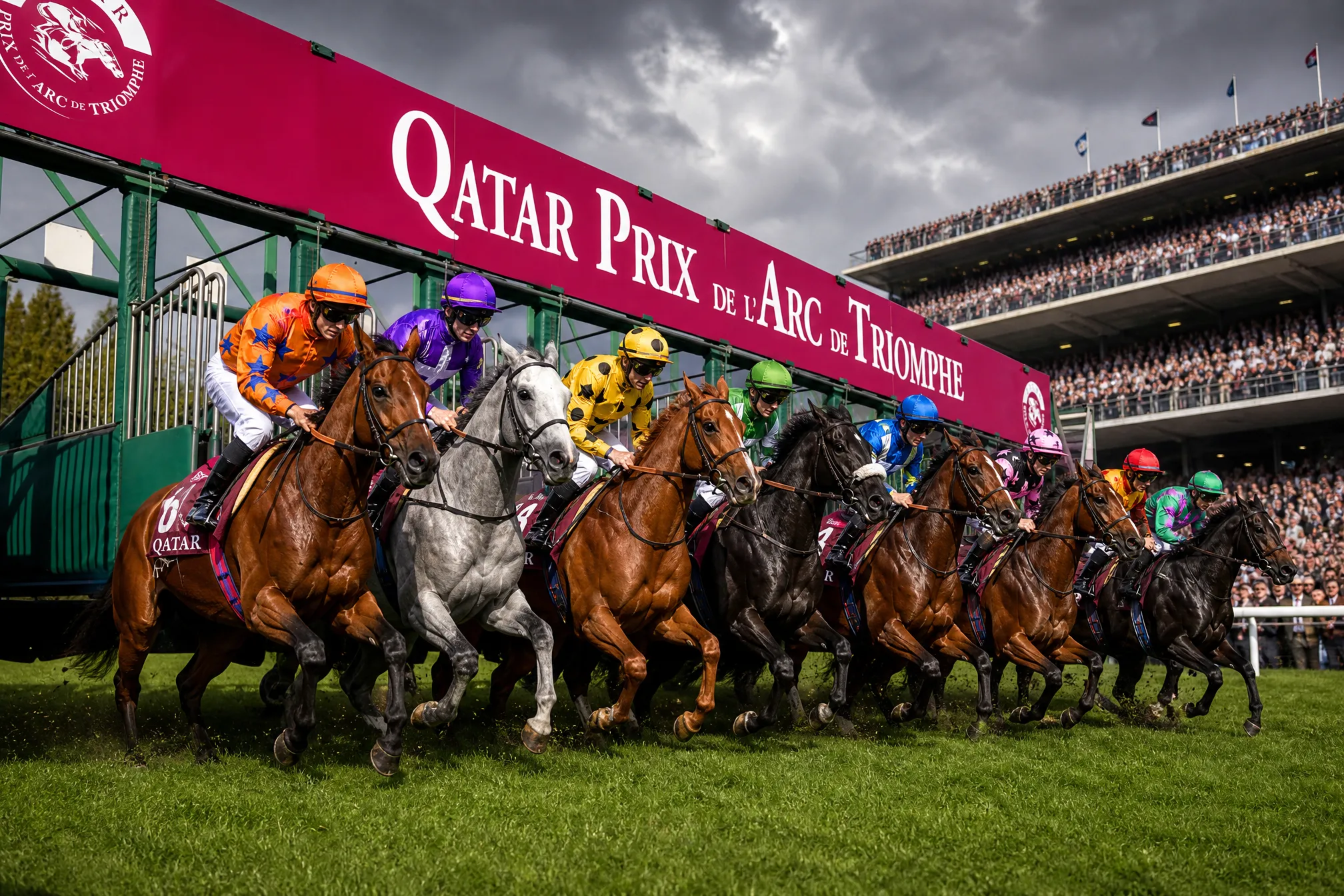
The European Pattern Committee (EPC) has approved a France Galop proposal to open the Gr.1 Qatar Prix de l’Arc de Triomphe to geldings, starting with the 2027 running. The decision ratifies a vote already taken by the France Galop Board of Directors, clearing the way for gelded horses to contest the race for the first time.
The EPC held a working meeting in Berlin, Germany, on 10 August 2026, attended by member countries England, France, Ireland and Germany, plus associated countries Italy, Scandinavia and Turkey. The France Galop board had voted to remove the gelding restriction on 23 June 2026, and the EPC’s approval formalised that decision at European level. The 2027 Prix de l’Arc de Triomphe, the first edition officially open to geldings, is scheduled for 3 October 2027 at Paris Longchamp.
The Arc had been one of the last major all-aged Group One races in Europe restricted to colts, fillies and mares, alongside the Prix Jacques le Marois. The Prix du Moulin de Longchamp was opened to geldings in 2020, leaving the Arc as one of the sport’s most prominent holdouts on the question.
Guillaume de Saint-Seine, President of France Galop, said the change was a matter of assembling the strongest possible field. “Opening the Qatar Prix de l’Arc de Triomphe to geldings is driven by a straightforward objective: to ensure that France’s greatest race brings together the best horses – colts, fillies and, from 2027, geldings,” he said.
Goliath And Calandagan Drove The Push
The push to admit geldings intensified after top-class geldings Goliath and Calandagan, both trained by Francis Graffard, were barred from the race in the two years before the decision. Calandagan ended 2025 as the world’s highest-rated racehorse, having won the Grand Prix de Saint-Cloud, the King George and the Champion Stakes, and became the first overseas runner in 20 years to win the Japan Cup.
Godolphin’s globetrotting gelding Rebel’s Romance, a Group One winner in Dubai, Hong Kong, the United States and Germany, was also cited as an example of a leading gelding shut out of the race under the previous conditions. In 2024, John Stewart, co-owner of Goliath, called for the restriction to be lifted, arguing it was inconsistent given that fillies with no fertility assurances were already permitted to run.
“We are convinced that this change will make the race even more compelling on the track and further strengthen its international profile and media appeal,” de Saint-Seine said. He described the EPC’s approval as “an important milestone in the consultation and decision-making process initiated by France Galop.”
Magnier And Fabre Remain Opposed
The proposal drew public opposition from leading figures in European racing when it first emerged, including trainers Aidan O’Brien and Andre Fabre, and Coolmore’s John Magnier. Fabre, the most successful trainer in Arc history with eight wins, said he remained opposed after the France Galop board’s June 2026 vote.
“I am firmly against it – I cannot see any benefit,” Fabre said. Magnier was similarly direct in his objection.
“I hope they don’t let the geldings into the Arc,” Magnier said. “The Arc is one of the real races and it won’t be any more if you include geldings.”
The new rule applies only from the 2027 edition onward, giving connections of gelded horses a full season’s notice before the change takes effect. Goliath and Calandagan, both trained by Francis Graffard, were among the geldings whose absence from the race had driven much of the debate leading up to the France Galop board’s vote, alongside Godolphin’s Rebel’s Romance, a Group One winner across four continents. Under the previous conditions, none of these horses could have contested Europe’s richest all-aged race regardless of their form elsewhere, a point their supporters raised repeatedly during the consultation process. With the restriction now set to lift from 2027, connections of similar horses will for the first time be able to weigh the Arc alongside the other major all-aged prizes when mapping out a season’s campaign, rather than having the race excluded from consideration by default. The debate that preceded the France Galop board’s vote, and the EPC’s subsequent ratification in Berlin, centred largely on whether that exclusion had become difficult to justify given the caliber of geldings competing at the top level internationally.