
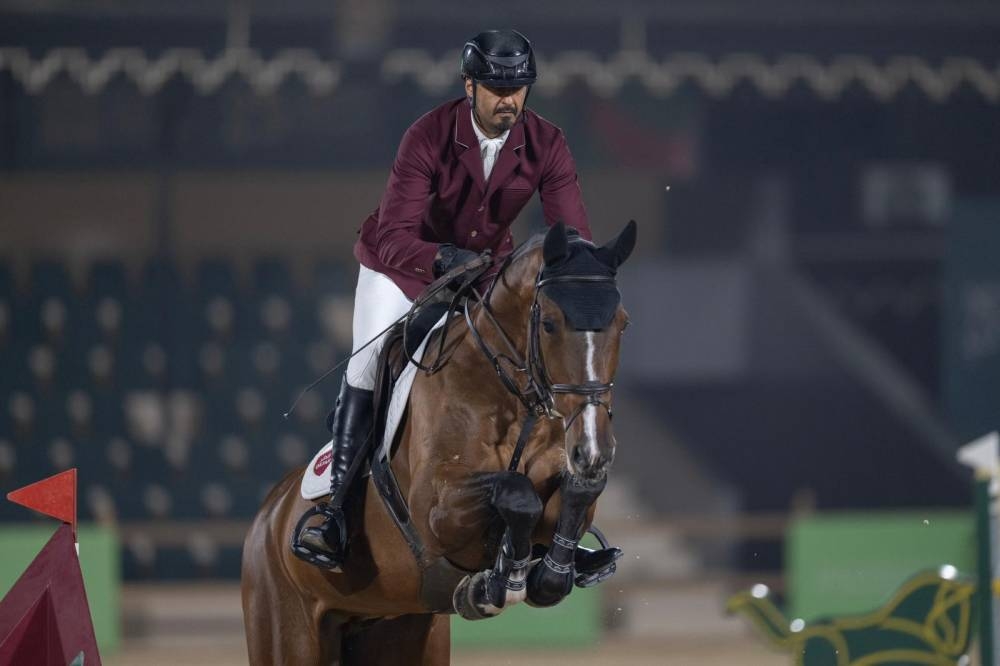
Qatar Names 12-Rider Squad For Asian Games Equestrian
Qatar will send 12 riders into showjumping, dressage and eventing at the Asian Games in Aichi-Nagoya, Japan, running from 19 September to 4 October 2026, the Qatar Equestrian and Modern Pentathlon Federation confirmed. The squad emerges from a summer training programme built specifically around the continental event, with camps targeting technical execution and physical conditioning across all three disciplines.
The showjumping team is made up of Sheikh Ali bin Khalid Al Thani, Sheikh Fahad bin Jassim Al Thani, Faleh Suwaid Al Ajmi and Bassem Mohammed. Jassim Jaham Al Kuwari and Saud Ahmed Al Buainain carry Qatar's colours in dressage, while the eventing team of Mohammed Jaber Al Nuaimi, Abdulaziz Ahmed Al Muhannadi, Mohammed Salem Al Marri and Mohammed Nasser Al Qadi will compete across dressage, cross-country and showjumping phases within their own discipline.
Bader Al Darwish, President of the Qatar Equestrian and Modern Pentathlon Federation, framed the selection as the product of a deliberate build-up rather than a late assembly of talent. "We are pleased to have reached this stage of preparation for the Aichi-Nagoya Asian Games," he said. "We have full confidence in our riders' abilities, experience and potential to deliver strong performances at this major continental event."
Al Darwish pointed to the breadth of the summer programme as the foundation for that confidence, noting that all three teams had passed through camps focused on sharpening technique and physical readiness ahead of a continental field he described as strong. "We have an outstanding group of participating riders, and we look forward to seeing them translate their extensive preparation into strong performances and positive results," he said. "We recognise, however, that the competition at the Asian Games will be fierce, given the participation of the continent's elite riders."
That framing sets Qatar's expectations against a regional field that has traditionally included some of the strongest equestrian programmes in Asia, spanning nations with long-established showjumping and dressage traditions as well as newer entrants investing heavily in the sport. Against that backdrop, fielding riders across all three Olympic equestrian disciplines rather than concentrating on one gives Qatar's federation multiple routes to a podium finish, even where individual results vary discipline by discipline.
A Three-Week Spread Across Three Disciplines
The competition schedule spreads the three disciplines across more than two weeks. Eventing opens the equestrian programme on 21 September with the team and individual dressage phases, before the cross-country test on 22 September and the team and individual showjumping rounds on 23 September, completing that discipline's three-day format. Dressage proper follows with the team final and individual qualifiers on 25 September, then individual rounds continuing on 26 and 27 September. Showjumping closes out the equestrian calendar, with the team competition beginning on 1 October and individual medals decided on 3 and 4 October.
That spread gives Qatar's eventing contingent an early test of the preparation Al Darwish referenced, since the discipline is first on the programme and combines all three phases inside three days. Mohammed Jaber Al Nuaimi, Abdulaziz Ahmed Al Muhannadi, Mohammed Salem Al Marri and Mohammed Nasser Al Qadi will need their dressage groundwork, cross-country conditioning and showjumping accuracy to hold up across that compressed window, with the team and individual dressage scores on 21 September setting the base before cross-country reshapes the leaderboard a day later.
The dressage pair of Jassim Jaham Al Kuwari and Saud Ahmed Al Buainain then get the longest run at their discipline, with more than 48 hours between the team final on 25 September and the closing individual rounds on 27 September, a gap that allows riders to reset after a demanding qualifying phase before medals are decided.
Showjumping, the final discipline to open, gives Sheikh Ali bin Khalid Al Thani, Sheikh Fahad bin Jassim Al Thani, Faleh Suwaid Al Ajmi and Bassem Mohammed close to two weeks longer to prepare once the Games are under way, with their team competition not beginning until 1 October, nine days after eventing's cross-country test and six days after dressage's team final.
Al Darwish said the cooperation between riders and the federation's technical and administrative staff would be central to translating the preparation into results in Japan, a link he returned to when discussing how the federation expects the group to perform once competition begins. He said the growing international experience within the current squad, built up across previous continental and international assignments, was part of what gave the federation confidence heading into Aichi-Nagoya.
With showjumping, dressage and eventing all represented, Qatar's 12-rider selection reflects a federation seeking coverage across the full spread of Olympic equestrian disciplines at a single Games, rather than concentrating resources in one area. The Aichi-Nagoya Games mark the latest test of that broader strategy, with results across three weeks of competition set to measure how the summer's preparation translates once Qatar's riders are competing against the rest of the continent.